EU-India Free Trade Agreement
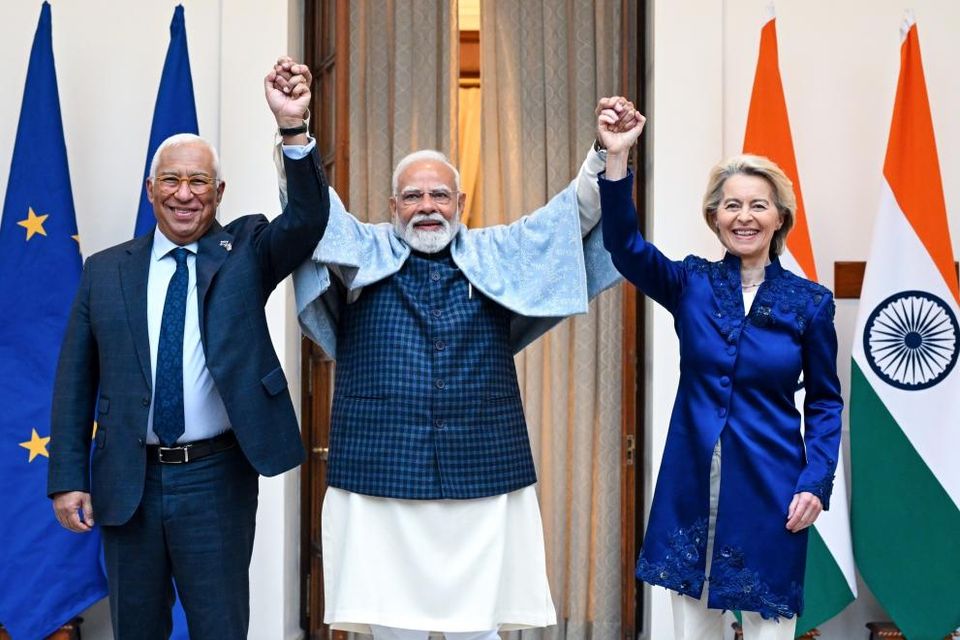
On the 27th of January 2026 in New Delhi, EU and India announced the conclusion of negotiations on a Free Trade Agreement (FTA), following negotiations that began in 2007. Once it enters into force, the agreement will constitute one of the world’s largest free trade areas, covering approximately 1.9 billion people (around a quarter of the global population), a quarter of global GDP and one third of global trade flows— making it the EU’s largest trade agreement to date. The overall objective of the EU–India Free Trade Agreement is to foster enhanced, mutually beneficial trade and investment relations between the EU and India. In practical terms, the agreement is expected to over time reduce tariffs on more than 90% of goods traded between the EU and India, improve market access, reduce technical barriers, enhance regulatory transparency and predictability. Overall, the agreement has the potential to reduce trade costs, increase transparency, and improve the trade and investment climate for Swedish companies in and with India. The announced agreement between the EU and India marks the conclusion of negotiations on the substantive content of the Free Trade Agreement. The EU–India FTA will enter into force only after the completion of the respective internal procedures on both sides. These include legal scrubbing, formal signing, translation into all EU official languages, and ratification in accordance with each party’s institutional and constitutional requirements. From the Indian side, Commerce Secretary Rajesh Agrawal, stated on 26 January that the FTA text will undergo a legal scrubbing process over the next 5-6 months before the formal signing. The agreement is expected to enter into force sometime next year. This deal is expected to double EU goods exports to India by 2032 by eliminating or reducing tariffs in value of 96.6% of EU goods exports to India. Overall, the tariff reductions are estimated to save around €4 billion per year in duties on European products. Examples of major interest for Swedish industry include car tariffs being cut from 110% to as low as 10%, car-part duties being fully eliminated within 5–10 years however electric vehicles are excluded for the first 5 years and tariffs of up to 44% on machinery, 22% on chemicals and 11% on pharmaceuticals largely removed. Under the EU-India FTA, some tariff reductions and market access improvements are expected to apply immediately when the agreement enters into force, while others will be phased in gradually over several years. The exact timing will depend on the final agreement and will be specified in the FTA schedules and annexes. Swedish companies should begin preparing by assessing how the agreement may affect their trade flows, supply chains, and market access in India, as well as by identifying potential opportunities for exports, investment, or local establishment. Business Sweden is available to support Swedish companies throughout this process. Business Sweden’s teams can provide guidance on how the agreement may impact individual business models, as well as practical support related to market entry and trade procedures. By combining on-the-ground expertise in India with policy and trade competence in Sweden, Business Sweden helps companies navigate both strategic and operational aspects of preparing for the agreement. Business Sweden’s India team (ask.india@business-sweden.se) can assist with questions related to business opportunities, market access, partner identification, and establishment in India. Business Sweden’s Stockholm team (exportregler@business-sweden.se) provides advice on trade procedures, customs matters, tariffs, and export regulations. The EU–India Free Trade Agreement is expected to be of particular benefit to small and medium-sized enterprises (SMEs), which are often disproportionately affected by tariffs, administrative burdens, and regulatory complexity when operating internationally. By reducing tariffs on a large share of EU exports to India and improving market access, the agreement aims to lower trade costs and make it easier for SMEs to enter or expand their presence in the Indian market. There will also be a dedicated chapter in the agreement that will further help SMEs take full advantage of the new export opportunities. For example, this chapter will put in place dedicated contact points on both sides to provide SMEs with relevant information on the FTA and help them with any specific issue they would face when trying to use the FTA's provisions. Beyond tariff reductions, the agreement seeks to address non-tariff barriers by promoting greater regulatory transparency, more predictable rules, and simplified procedures for trade in goods and services. Business Sweden: Business Sweden helps Swedish companies grow global sales and supports international companies in investing and expanding in Sweden. Its mission is to strengthen Swedish exports, promote inward and outward investment, and enhance international business cooperation. Business Sweden can support Swedish companies with advisory on how the EU–India Free Trade Agreement may affect business opportunities in and with India and throughout their entire India journey — from market analysis and strategic advisory services, to partner identification, establishment, exports and sourcing. Business Sweden’s India team (ask.india@business-sweden.se) can assist with questions related to business opportunities, market access, partner identification, and establishment in India. Business Sweden’s Stockholm team (exportregler@business-sweden.se) provides advice on trade procedures, customs matters, tariffs, and export regulations. Swedish Chambers of Commerce India: The Swedish Chamber of Commerce India (SCCI) is an independent, non-profit organization, and the hub for Swedish companies in the country. SCCI supports Swedish companies with the practical implementation of the FTA on the ground. We engage with state and central authorities, clarify operational implications for businesses, and enable cross‑learning between companies by fostering dialogue, interaction, and the exchange of best practices. You can contact them on contact@swedishchamber.in National Board of Trade Sweden: The National Board of Trade is a Swedish government agency for international trade, the EU internal market and trade policy. Its mission is to facilitate free and open trade with transparent rules as well as free movement in the EU internal market. The National Board of Trade can be contacted for questions regarding the content of the Free Trade Agreement. registrator@kommerskollegium.se Sweden-India Business Council: The role of Sweden-India Business Council is to ensure that decision-makers in Sweden has the right information to make the smart decision. For the purpose of the Free Trade Agreement, they will: Share more specific information through e-mails to its members Publish general information on social media Organize Roundtables where they discuss relevant topics and strategies Invite key people to share information through seminars Have one-to-one meetings with members Participate in Team Sweden to align support for industry Sweden-India Business Council can be reached by e-mail at info@sibc.se